
Discussion
Loading...

#Tag

  • About
  • Code of conduct
  • Privacy
  • About Bonfire
Winchell Chung ⚛🚀 boosted
Michael Hanscom
@djwudi@tenforward.social  ·  activity timestamp 3 days ago

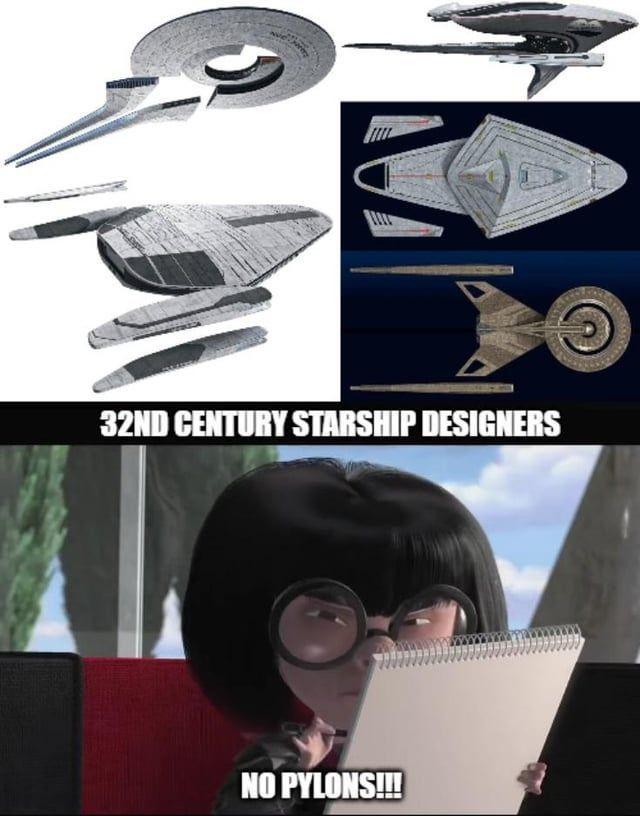
Copying a little rant I made over on Bluesky yesterday, prompted by the attached Edna Mode "No pylons!" meme: https://bsky.app/profile/michaelhans.com/post/3mdvfjk3rgk2u

Honestly, this has been bugging me ever since Discovery jumped forward. To me, it's exemplary of the "designed to look cool" mindset rather than the "designed to make some amount of (even science-fictional) sense" mindset.

Has anyone done a treknobabble deep-dive into how these designs function?

It just reminds me of how Matt Jeffries originally put a lot of thought and drew upon his aviation background to create a design that made logical sense even when depending upon technologies that didn't exist yet: https://en.wikipedia.org/wiki/USS_Enterprise_(NCC-1701)#Concept_and_initial_design

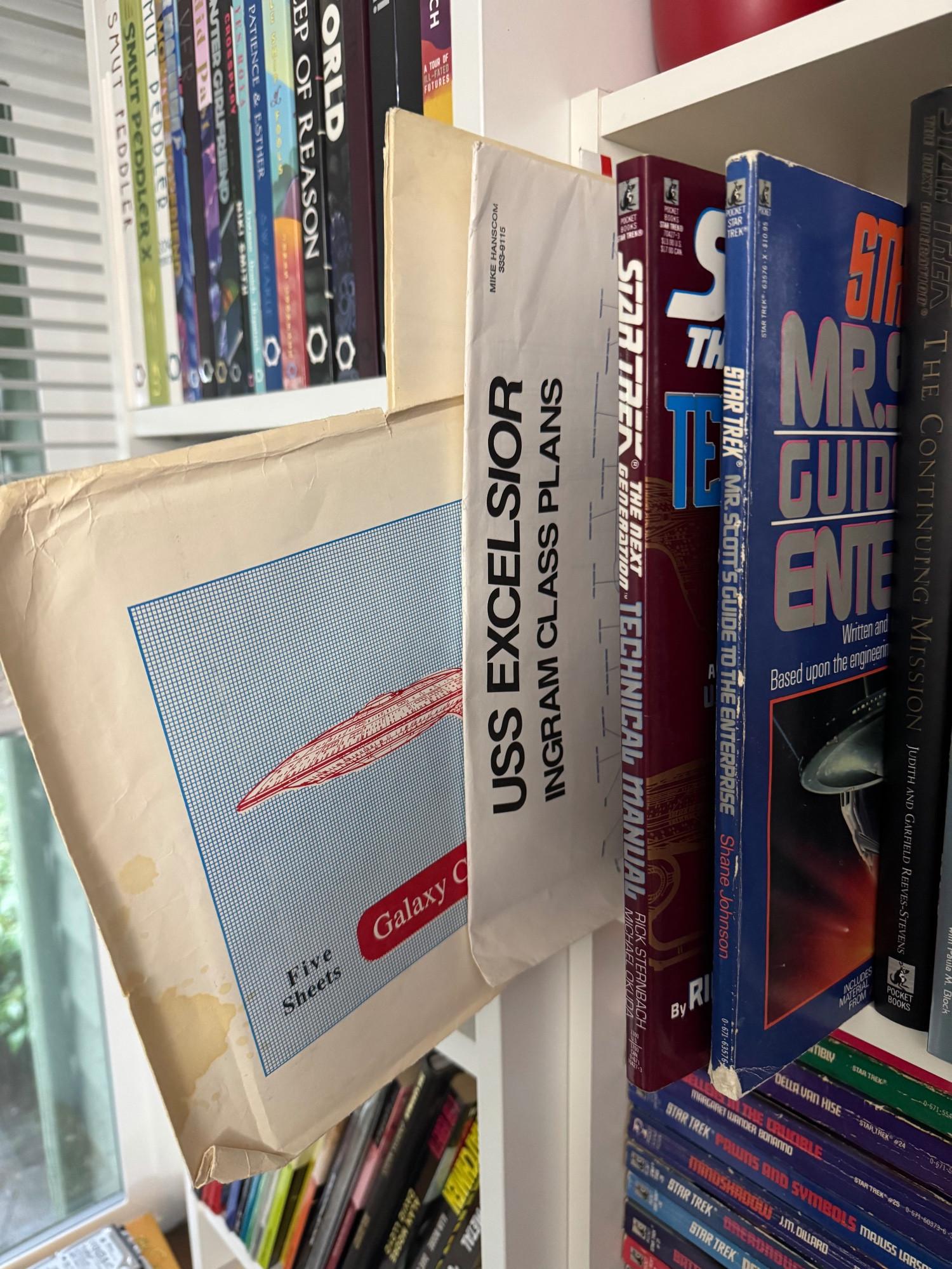
It was one of the things that really drew me into Trek when I was a kid (as evidenced by the various blueprints and technical manuals still on my bookshelves). There was a believable, logical solidity to the designs. Yes, they looked cool, but they also made sense.

These new designs with nacelles just floating near the ship don't do the same thing for me. They don't look like something that makes _sense_, they look like something that looks _neat_. It moves Star Trek away from science fiction and into the realm of the science fantasy of Star Wars.

Are there still engineering sections? Is there a centralized warp core containing and distributing the power from the dilithium crystals? We know those are still necessary for warp flight, after all, so they must be powered and managed in some way. If so, how does that power get to those nacelles?

What benefits are there to the floating nacelle design? How are they serviced, especially in emergency situations? What if the transporter isn't working (a long-standing Trek tradition, after all)? Having critical ship's infrastructure physically disconnected seems like a big potential liability.

And speaking of the transporter, that also seems to have crossed over into "magic" territory. People just blip in and out, and there doesn't even seem to be anything triggering it in most situations. I can go with the system being smart enough not to beam someone into an otherwise occupied space, but it sure seems like it would be startling to have people suddenly popping into existence at any random point and time. If I was doing something critical, I'm not sure I'd want to have a sudden *pwoof* startling me just because someone beamed in unexpectedly.

Picard's open "transporter doorways" really bugged me. There were people walking in and out of them from both directions, and yet nobody ever collided. People would constantly be bouncing off someone just coming out of or heading towards one of those portals! Those were entirely nonsensical.

I want a universe I can believe in. Things can even look cool; I'm not opposed to that! But even a far-future science fictional universe has to have some underlying logic and thought to make it believable, otherwise it's just magic without boundaries or limitations.

So, Star Trek tech geeks: What's the underlying logic and technobabble that makes these designs functionally believable? What makes them science fiction and not science fantasy?

#StarTrek #DIS #TOS #PIC #SNW #SFA #ScienceFiction #SciFi #ScienceFantasy
USS Enterprise (NCC-1701) - Wikipedia

A portion of my bookshelf, with blueprints for the Enterprise-D and Excelsior, the TNG Technical Manual, and Mr. Scott's Guide to the Enterprise pulled out to be more visible.
Meme showing five modern Star Trek ship designs with floating, detached nacelles. Under text that says "32nd century starship designers", Edna Mode from The Incredibles frowns at her sketch pad and declares, "No pylons!"
  • Copy link
  • Flag this post
  • Block
Michael Hanscom
@djwudi@tenforward.social  ·  activity timestamp 3 days ago

Copying a little rant I made over on Bluesky yesterday, prompted by the attached Edna Mode "No pylons!" meme: https://bsky.app/profile/michaelhans.com/post/3mdvfjk3rgk2u

Honestly, this has been bugging me ever since Discovery jumped forward. To me, it's exemplary of the "designed to look cool" mindset rather than the "designed to make some amount of (even science-fictional) sense" mindset.

Has anyone done a treknobabble deep-dive into how these designs function?

It just reminds me of how Matt Jeffries originally put a lot of thought and drew upon his aviation background to create a design that made logical sense even when depending upon technologies that didn't exist yet: https://en.wikipedia.org/wiki/USS_Enterprise_(NCC-1701)#Concept_and_initial_design

It was one of the things that really drew me into Trek when I was a kid (as evidenced by the various blueprints and technical manuals still on my bookshelves). There was a believable, logical solidity to the designs. Yes, they looked cool, but they also made sense.

These new designs with nacelles just floating near the ship don't do the same thing for me. They don't look like something that makes _sense_, they look like something that looks _neat_. It moves Star Trek away from science fiction and into the realm of the science fantasy of Star Wars.

Are there still engineering sections? Is there a centralized warp core containing and distributing the power from the dilithium crystals? We know those are still necessary for warp flight, after all, so they must be powered and managed in some way. If so, how does that power get to those nacelles?

What benefits are there to the floating nacelle design? How are they serviced, especially in emergency situations? What if the transporter isn't working (a long-standing Trek tradition, after all)? Having critical ship's infrastructure physically disconnected seems like a big potential liability.

And speaking of the transporter, that also seems to have crossed over into "magic" territory. People just blip in and out, and there doesn't even seem to be anything triggering it in most situations. I can go with the system being smart enough not to beam someone into an otherwise occupied space, but it sure seems like it would be startling to have people suddenly popping into existence at any random point and time. If I was doing something critical, I'm not sure I'd want to have a sudden *pwoof* startling me just because someone beamed in unexpectedly.

Picard's open "transporter doorways" really bugged me. There were people walking in and out of them from both directions, and yet nobody ever collided. People would constantly be bouncing off someone just coming out of or heading towards one of those portals! Those were entirely nonsensical.

I want a universe I can believe in. Things can even look cool; I'm not opposed to that! But even a far-future science fictional universe has to have some underlying logic and thought to make it believable, otherwise it's just magic without boundaries or limitations.

So, Star Trek tech geeks: What's the underlying logic and technobabble that makes these designs functionally believable? What makes them science fiction and not science fantasy?

#StarTrek #DIS #TOS #PIC #SNW #SFA #ScienceFiction #SciFi #ScienceFantasy
USS Enterprise (NCC-1701) - Wikipedia

A portion of my bookshelf, with blueprints for the Enterprise-D and Excelsior, the TNG Technical Manual, and Mr. Scott's Guide to the Enterprise pulled out to be more visible.
Meme showing five modern Star Trek ship designs with floating, detached nacelles. Under text that says "32nd century starship designers", Edna Mode from The Incredibles frowns at her sketch pad and declares, "No pylons!"
  • Copy link
  • Flag this post
  • Block
Log in

Hiti

हिति , in Nepāl Bhāṣā, is the word for a shared community water tap. Even in modern Newar cities, these ancient structures still pour out fresh mountain water piped through ancient underground filters and conduits. They are a place to wash, to talk, to drink, to meet the locals: a nourishing, refreshing social-ecological place.

Hiti: About · Code of conduct · Privacy ·
Bonfire social · 1.0.0 no JS en-GB
Automatic federation enabled
  • Explore
  • About
  • Code of Conduct
Home
Login